Vision
To become a leading Master of Computer Science program in the development of information technology through research and innovation, with competitiveness at national and international levels.




Master · Universitas Prima Indonesia
Innovating Technology for the Future
A master’s program focused on information technology, artificial intelligence, data analysis, and software innovation.
Master of Computer Science is a graduate program designed to develop analytical, research, and innovation skills in the field of information technology. The program covers areas such as artificial intelligence, data analytics, cybersecurity, and software development. Students are equipped with strong theoretical knowledge and practical skills to solve complex problems in industry and society. Graduates are expected to become researchers, professionals, and leaders who can adapt to rapid technological advancements.
To become a leading Master of Computer Science program in the development of information technology through research and innovation, with competitiveness at national and international levels.
To produce graduates with high competence in computer science. To enhance research and innovation capabilities in information technology development. To produce scientific works that benefit society and industry. To develop graduates who are professional, ethical, and adaptive to technological advancements.
Achieving graduates who are competent and competitive at national and international levels. Increasing the number and quality of scientific publications. Establishing collaborations with industry and educational institutions. Implementing community service based on information technology.
Attitudes Demonstrate integrity, ethics, and respect for humanity. Exhibit academic and professional ethics in computer science. Show responsibility, discipline, and teamwork. Knowledge Master advanced concepts in computer science such as artificial intelligence, data science, and software engineering. Understand research methodologies in information technology. General Skills Apply critical, systematic, and innovative thinking in problem-solving. Produce and publish scientific work. Specific Skills Design and develop information technology-based solutions. Analyze data using modern computational techniques.
Percentage of on-time graduation rate. Average Grade Point Average (GPA) of graduates. Number and quality of scientific publications by students and lecturers. Number of research outputs and innovations. Graduate employability rate. Number of collaborations with industry and national and international institutions. Level of student and stakeholder satisfaction. Availability and utilization of learning and research facilities.
| Code | Course / Stage | Credits |
|---|---|---|
| IKP-8201 | Statistika untuk Sains data | 2 |
| IKP-8302 | Pembelajaran Mesin | 3 |
| IKP-8303 | Algoritma Lanjutan untuk Sains Data | 3 |
| IKP-8204 | Metodologi Penelitian | 2 |
| IKP-8305 | Teknologi Kewirausahaan & Manajemen Inovasi | 3 |
| Total | 13 | |
Fields of work and professional roles graduates may pursue after completing the program.
SK Dekan 005/SK/LL/F8.I/UNPRI/IX/2026
SK Dekan 005/SK/LL/F8.I/UNPRI/IX/2026
Characteristics and capabilities expected of graduates of this study program.
Berlandaskan Visi Universitas Prima Indonesia sebagai institusi unggul dalam socio-technopreneurship yang inovatif dan adaptif, lulusan mampu menginisiasi, mengelola, dan mengembangkan usaha atau inovasi berbasis Kecerdasan Buatan dan Data Science yang memberikan nilai tambah ekonomi sekaligus dampak sosial bagi masyarakat dan industri, dengan menjunjung kemandirian, kejuangan, dan etika kewirausahaan.
Berlandaskan Visi Fakultas Sains dan Teknologi untuk unggul secara inovatif dan adaptif dengan daya saing internasional, serta Misi Fakultas dalam menyelenggarakan riset dan publikasi di bidang teknologi dan ilmu komputer, berperan aktif dalam pelayanan kepada masyarakat, serta menjalin kerja sama lintas institusi di tingkat nasional maupun internasional, lulusan mampu melaksanakan penelitian terapan di bidang Kecerdasan Buatan dan Data Science secara kolaboratif lintas institusi, menghasilkan publikasi ilmiah yang inovatif dan berdaya saing internasional, serta menerapkan hasil riset dalam pengabdian kepada masyarakat dan kemitraan strategis dengan mitra akademik maupun industri
Diturunkan dari OL-1, lulusan memiliki sikap visioner, berintegritas, dan bertanggung jawab atas etika serta tata kelola data (responsible AI); menguasai pengetahuan tingkat lanjut machine learning, deep learning, dan data mining beserta strategi dan tata kelola data (data governance); serta mampu menerapkan keterampilan memimpin fungsi dan tim data science, merancang strategi pemanfaatan data organisasi, mengarahkan dan mengevaluasi pengembangan model kecerdasan buatan, hingga merumuskan keputusan strategis berbasis data dan mengomunikasikannya pada tingkat eksekutif — dilandasi penguasaan penuh siklus Data Science (SKKNI No. 299 Tahun 2020) dan diperkuat kompetensi kepemimpinan AI (mis. Google Skills — Generative AI Leader).
Diturunkan dari OL-2, lulusan memiliki sikap analitis, cermat, kritis berbasis bukti, dan sadar dampak sosial AI; menguasai pengetahuan teoritis machine learning, deep learning, computer vision, dan natural language processing, termasuk penguasaan bahasa dan pustaka pemrograman AI (mis. Python) serta pengelolaan dan basis data; serta mampu menerapkan keterampilan merancang, membangun, melatih, mengevaluasi, dan melakukan deployment model kecerdasan buatan, mengolah dan memvisualisasikan data secara informatif, hingga menghasilkan solusi AI terapan pada domain pertanian cerdas, kesehatan, dan bisnis digital dengan memanfaatkan Laboratorium AI — kompetensi yang selaras dengan skema sertifikasi Associate Data Scientist / AI Engineer (BNSP, SKKNI No. 299 Tahun 2020).
Attitudes, knowledge, and skills students are expected to achieve by graduation.
Internalize the spirit of independence, struggle and technopreneurship;
Landasan sikap bagi DK-1 & DK-3
Uphold honesty in maintaining the integrity of the data and information handled;
Landasan sikap bagi DK-1–DK-3
Mastering the theoretical concepts of mathematics, statistics, and computational science relevant to big data processing;
DP (penguasaan teori)
Able to analyze the theories and principles of machine learning, deep learning, and data mining to solve complex data problems;
DP; DK-2
Capable of developing principles for integrating Computer Vision, e-Business, and Intelligent Systems within the context of big data research and applications;
DP; DK-1
Capable of applying logical, critical, systematic, and innovative thinking in the context of the development or implementation of science and technology, while observing and applying humanistic values relevant to their field of expertise;
DK-2
Capable of analyzing the implications of the development or implementation of science and technology—while considering and applying humanistic values relevant to their field of expertise and adhering to scientific principles, procedures, and ethics—in order to produce solutions, ideas, designs, or art critiques; and capable of compiling a scientific description of their findings in the form of a thesis and a scholarly journal publication, as well as uploading them to the higher education institution's website.
DK-1 & DK-3
Drafting a scientific description of the aforementioned study results in the form of a thesis and a scientific journal publication, and uploading them to the university's website;
DK-3
Capable of analyzing and formulating complex, data-driven problems using mathematical models, inferential statistics, and computational principles to generate measurable solutions in the fields of Data Science and Intelligent Systems;
DK-2
Capable of identifying patterns and root causes of problems through multivariate data exploration and analysis, as well as designing computational approaches based on machine learning algorithms to address these issues;
DK-2
Capable of implementing machine learning and deep learning algorithms—including parameter optimization and model validation—to generate accurate predictions or classifications tailored to the data context;
DK-1
Able to carry out applied research in the field of data science independently which includes problem formulation, modeling, experimentation, analysis of results, and compiling reputable scientific reports/publications in accordance with academic ethics;
DK-1 & DK-3
Approved and locked RPSMK are grouped by semester. The cohort source follows the newest available RPSMK for each course in that semester.
This course equips students to analyze and implement statistical methods for data science: descriptive statistics & EDA, probability & inferential statistics (estimation and hypothesis testing), and correlation & regression, using Python and BigQuery, emphasizing critical-analytical thinking to formulate and solve data-based problems.
This course equips students to analyze, design, and implement machine learning models: supervised learning (regression & classification), unsupervised learning (clustering & dimensionality reduction), and model validation and evaluation, using Python in the DataLab environment, emphasizing critical thinking and application to real data problems.
This course equips students to analyze and implement algorithms and data structures for data science: complexity analysis & fundamental data structures, algorithm design techniques (divide-and-conquer, greedy, dynamic programming), and graph algorithms and optimization, using Python, emphasizing complexity analysis and formulating computational solutions to complex data problems.
This course equips students to formulate research problems and conduct systematic literature reviews, design valid research methodology (design, data collection, and analysis), and produce and publish scholarly work in accordance with research principles and ethics, emphasizing critical thinking, data integrity, and publishable research outputs.
This course equips students with a technology-based entrepreneurial mindset and skills: identifying opportunities and building business models, managing innovation and AI/data-based product development, and commercializing technology products through digital business, emphasizing the technopreneurship spirit, innovative thinking, and integration of intelligent solutions (Computer Vision, e-Business, Intelligent Systems).
This course equips students to apply cryptographic principles and algorithms to secure data and information: classical and symmetric cryptography, asymmetric cryptography, hash functions and digital signatures, key management, and applied data protection, using Python and Google Cloud services (KMS, DLP), emphasizing data integrity and critical evaluation of security mechanisms.
This course equips students to analyze and apply Natural Language Processing (NLP): text preprocessing and representation, language modeling and sequence models (RNN/Transformer), and large language models (LLM) and their applications, using Python, TensorFlow, and Vertex AI, emphasizing designing computational approaches and implementing language models.
This course guides students to develop a magister thesis research proposal: problem formulation and literature synthesis, methodology and research-plan design, and proposal writing and defense in accordance with research principles and ethics, emphasizing scholarly reasoning, academic integrity, and a proposal ready to proceed to a thesis.
This course equips students to apply cloud computing concepts and services: infrastructure (compute, storage, networking), containerization and Kubernetes orchestration, and scalable, reliable distributed system architectures, using Google Cloud, emphasizing theoretical computing foundations and implementing distributed systems.
This course equips students to apply the end-to-end data science workflow: exploratory data analysis (EDA), feature engineering, predictive modeling (including BigQuery ML), evaluation, and model presentation and deployment, using Python, BigQuery, and Vertex AI, emphasizing analyzing and formulating data problems and designing computational approaches.

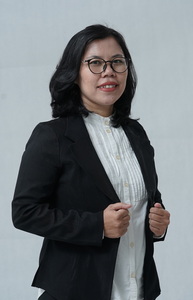
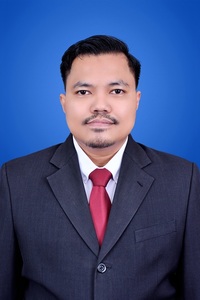
Head of Study Program