Vision
Producing Master of Health graduates who are professional, have socio-technopreneurship insight and excel in the HealthCare Professional Community




Master · Universitas Prima Indonesia
Integration of Research and Policy by Globally Minded Professionals
Master's program in public health and disease prevention.
The Master's Program in Public Health is an advanced education program designed to equip students with knowledge and skills in public health, epidemiology, health promotion, and health policy. This program aims to train professionals capable of addressing public health challenges at local, national, and global levels. Students will study various aspects of public health, including health data analysis, healthcare management, communicable and non-communicable disease control, and evidence-based health program planning. The research-based curriculum and fieldwork opportunities allow students to gain firsthand experience in public health conditions. In addition to theoretical knowledge, this program emphasizes leadership skills, health communication, and data-driven policymaking. Students are encouraged to conduct research, publish their findings, and participate in academic conferences to expand their expertise in public health. Graduates of this program are expected to work in various sectors, including government agencies, international health organizations, hospitals, research institutions, and non-governmental organizations focusing on public health.
Producing Master of Health graduates who are professional, have socio-technopreneurship insight and excel in the HealthCare Professional Community
Produce Health Personnel graduates with Master's qualifications in public health who are professional, have Healthcare Professionals Community excellence and have a Sociotechnopreneurship insightThe production of scientific work in the field of Healthcare Professionals Community which is used to answer public health problems, especially to improve the level of public health;The production of Community Service based on Sociotechnopreneurship, reasoning and research works of the Healthcare Professionals Community which is useful for solving public health problems; Produce optimum resource management supported by collaboration with institutions both domestic and foreign.
Creation of health worker graduates with Master's qualifications in public health who are professional, have Healthcare Professionals Community excellence and have a Sociotechnopreneurship insight;Creation of Scientific Work in the field of Healthcare Professionals Community which is used to answer public health problems, especially to improve the level of public health; The realization of Community Service based on Sociotechnopreneurship, reasoning and research works of the Healthcare Professionals Community which is useful for solving public health problems;The realization of excellent service with good governance to ensure the achievement of graduate competencies;Creation of quality, mutually beneficial institutional collaboration activities to support the achievement of graduate competencies;Creation of superior human resources to support the achievement of graduate competencies;Creation of students who excel and achieve both academically and non-academicly.
| Code | Course / Stage | Credits |
|---|---|---|
| KSM8201 | Kesehatan Lingkungan Intermediet | 2 |
| KSM8202 | Administrasi dan Kebijakan Kesehatan Intermediet | 2 |
| KSM8203 | Biostatistika Intermediet | 2 |
| KSM8204 | Promosi Kesehatan Intermediet | 2 |
| KSM8205 | Epidemiologi Intermediet | 2 |
| KSM8206 | Keselamatan dan Kesehatan Kerja Intermediet | 2 |
| KSM8207 | Kesehatan Reproduksi Intermediet | 2 |
| KSM8208 | Metode Penelitian Kuantitatif | 2 |
| KSM8209 | Gizi Kesehatan Masyarakat Intermediet | 2 |
| KSM8210 | Manajemen Strategis dan Manajemen Mutu Pelayanan Kesehatan | 2 |
| Total | 20 | |
Fields of work and professional roles graduates may pursue after completing the program.
Deskripsi OL1
Characteristics and capabilities expected of graduates of this study program.
Mampu menerapkan prinsip socio-technopreneurship dalam mengidentifikasi peluang, merancang, dan menciptakan inovasi produk atau layanan kesehatan masyarakat secara mandiri.
Mampu memecahkan masalah kesehatan masyarakat secara etis dan profesional melalui pemikiran kritis, pendekatan kreatif, dan pemanfaatan teknologi.
Mampu merencanakan, mengorganisasikan, memimpin, serta mengevaluasi program dan kebijakan kesehatan pada berbagai tingkat fasilitas pelayanan kesehatan.
Attitudes, knowledge, and skills students are expected to achieve by graduation.
Able to analyze ethics, integrity, and a sociotechnopreneurship spirit grounded in public health awareness.
Deskripsi CPL1
Able to analyze leadership and innovation based on health technology professionally and adaptively.
Deskripsi CPL2
Able to analyze public health problems based on epidemiological and biostatistical approaches.
Deskripsi CPL3
Able to analyze theories and concepts of administration, policy, and health service management in depth.
Deskripsi CPL4
Able to evaluate health policies and health promotion strategies in resolving public health problems.
Deskripsi CPL5
Able to evaluate communication, advocacy, and strategic partnership systems with stakeholders.
Deskripsi CPL6
Able to evaluate digital public health information systems (Digital Public Health) efficiently.
Deskripsi CPL7
Able to evaluate strategic actions based on evidence (evidence-based decision making) and logical-critical thinking.
Deskripsi CPL8
Able to create rigorous public health research designs (quantitative, qualitative, mixed-method).
Deskripsi CPL9
Able to create effective public health intervention programs.
Deskripsi CPL10
Able to create accountable cross-sector collaboration and organizational resource management in health services.
Deskripsi CPL11
Able to create scientific works, theses, and communicate research results at national/international forums.
Deskripsi CPL12
Approved and locked RPSMK are grouped by semester. The cohort source follows the newest available RPSMK for each course in that semester.
This course equips master's students with in-depth knowledge in environmental health risk assessment (EHRA), advanced environmental health concepts, and designing as well as evaluating evidence-based environmental health intervention programs.
Intermediate Health Administration and Policy equips Master of Public Health students to analyze and design health administration, governance, management, and policy at organizational, health-system, and cross-sector levels. Topics include health systems and governance, organization and accountability, situation-based planning and priority setting, health financing and JKN, the health workforce, the policy cycle, agenda setting and problem framing, stakeholder and political-economy analysis, policy formulation and implementation, monitoring-evaluation and performance management, data governance and SATUSEHAT digital transformation, cross-sector collaboration and Health in All Policies, and the development of policy briefs and strategic recommendations for public health problems including noncommunicable/degenerative diseases. Students use data, scientific evidence, risk analysis, equity, ethics, and community needs to develop feasible and sustainable solutions.
Intermediate Biostatistics equips Master of Public Health students to appropriately select, apply, evaluate, and interpret statistical methods for health data. Topics include data types and measurement scales, probability and sampling distributions, the central limit theorem, data exploration and visualization, descriptive statistics, estimation and confidence intervals, hypothesis testing, power, parametric and nonparametric tests, categorical data analysis, correlation, simple and multiple linear regression, logistic regression, model diagnostics, confounding and interaction, introductory survival analysis, missing-data handling, and reproducible statistical analysis using statistical software. Learning emphasizes choosing methods according to research questions, study design, assumptions, effect measures, uncertainty, and transparent evidence-based reporting.
Intermediate Health Promotion equips Master of Public Health students to analyze behavioral and social determinants of health, apply behavior-change theories, assess health needs and health literacy, design evidence-based health-promotion interventions, empower communities, use communication and digital media, develop settings-based health promotion, build cross-sector partnerships, apply social marketing, manage infodemics, and develop advocacy and healthy public policy. Learning emphasizes the design, implementation, monitoring, and evaluation of health-promotion programmes that are effective, equitable, participatory, adaptive, and sustainable, including for the prevention and management of noncommunicable/degenerative diseases.
Intermediate Epidemiology equips Master of Public Health students to analyze the distribution and determinants of health problems, select and evaluate epidemiologic study designs, calculate and interpret measures of frequency and association, assess validity, bias, confounding, interaction, screening and diagnostic tests, apply causal-inference principles, analyze the epidemiology of noncommunicable/degenerative diseases, design surveillance, conduct outbreak investigations, use digital/spatial epidemiology and dashboards, critically appraise epidemiologic evidence, and translate epidemiologic findings into health-programme and policy recommendations. Learning emphasizes the use of data, scientific evidence, ethics, equity, reproducibility, and community needs.
This course equips master's students with in-depth knowledge in occupational health and safety risk analysis, advanced OHS principles, and designing as well as evaluating OHS management systems across various industrial sectors.
Intermediate Reproductive Health examines reproductive health across the life course through reproductive rights, reproductive epidemiology and demography, gender and equity, adolescent sexual and reproductive health, family planning, fertility and infertility, preconception health, maternal and perinatal health, sexually transmitted infections and HIV, gender-based violence, reproductive health in humanitarian settings, digital technology and data, programme planning, monitoring and evaluation, and evidence-based reproductive-health policy and intervention development.
Quantitative Research Methods equips Master of Public Health students to formulate research questions and hypotheses, select appropriate quantitative study designs, operationalize variables, develop sampling and sample-size strategies, assess instrument validity and reliability, manage and clean data, select and apply descriptive, inferential, bivariate, and multivariable statistical analyses, control bias and confounding, assess interaction, interpret effect measures and uncertainty, and prepare transparent, ethical, reproducible, evidence-based analysis and reporting plans. Learning culminates in a quantitative research proposal/protocol relevant to public health and degenerative disease problems.
Intermediate Public Health Nutrition examines nutrition problems across the life course through nutritional epidemiology, nutritional-status assessment, social and food determinants, food security, maternal and child nutrition, stunting, wasting, anaemia, overweight and obesity, nutrition-related noncommunicable diseases, fortification and supplementation, food safety, nutrition-specific and nutrition-sensitive interventions, nutrition surveillance, digital technology, programme planning, monitoring and evaluation, and evidence-based public-health nutrition policy and intervention development.
Strategic Management and Health Service Quality Management is a Hospital Administration and Management concentration course that examines strategic environmental analysis, governance, leadership, strategy formulation and implementation, balanced scorecards, performance measurement, quality management, patient safety, clinical governance, risk management, accreditation, continuous quality improvement, benchmarking, patient experience, digital dashboards, organizational change, and the development of data-, evidence-, regulation-, and user-needs-based strategic plans and quality-improvement projects.
Health Systems, Governance, Policy and Financing examines health-system structure and functions, governance, leadership, regulation, health policy, universal health coverage, revenue raising, pooling, purchasing, benefit packages, provider payment, strategic purchasing, financial protection, public financial management, equity, accountability, decentralization, digital-health governance, health-system performance analysis, and the formulation of data-, evidence-, risk-, and community-needs-based health-system reform recommendations.
Qualitative and Mixed Methods Research examines qualitative and mixed-methods paradigms and designs in public health, including problem formulation, design selection, sampling, in-depth interviews, focus groups, observation, documents, ethics, reflexivity, qualitative data management and analysis, coding, thematic analysis, content analysis, trustworthiness, integration of quantitative and qualitative data, joint displays, meta-inference, mixed-methods designs, quality appraisal, scientific reporting, and development of evidence-based research proposals and products.
Intermediate Digital Public Health examines the use of digital technologies, data, and information systems to strengthen public-health functions through people-centred, evidence-based, safe, ethical, interoperable, inclusive, and equitable approaches. The course covers digital-health transformation, health information systems and electronic health records, interoperability, data governance, privacy and cybersecurity, data quality, dashboards and visualization, digital epidemiology, digital surveillance, GIS, telehealth, mHealth, wearables, clinical decision support, artificial intelligence, infodemic management, digital health literacy, digital inclusion, regulation, implementation, evaluation, scale-up, and sustainability of digital public-health interventions.
Applied Epidemiology, Digital Surveillance and Investigation examines the application of epidemiologic principles for detecting, analyzing, investigating, responding to, and evaluating public-health problems through field epidemiology, indicator- and event-based surveillance, digital surveillance, GIS, dashboards, early warning, outbreak investigation, descriptive and analytic epidemiology, surveillance-system evaluation, risk communication, One Health, and evidence-based response and policy recommendations.
Hospital Management and Patient Safety examines integrated hospital management through governance, leadership, planning, service operations, human resources, finance, facilities, quality, risk, accreditation, safety culture, patient-safety goals, incident reporting, root cause analysis, failure mode and effects analysis, high-reliability organizations, change management, quality indicators, digital dashboards, and the development of data-, evidence-, regulation-, and patient-needs-based quality and patient-safety improvement strategies and projects.
Healthcare Professional Community and Health Empowerment examines the development of healthcare professional communities and community empowerment through community engagement, interprofessional collaboration, community diagnosis, asset-based community development, health literacy, behaviour-change communication, participatory planning, co-creation, advocacy, community-based interventions, digital communities, monitoring and evaluation, social accountability, equity, sustainability, and evidence-based capacity strengthening for individuals, families, groups, communities, and health-service networks.
Food Systems and Community-Based Nutrition Interventions examines the links among food systems, food security, food environments, consumption, nutritional status, social determinants, and public health, and the design of community-based nutrition interventions using life-course, food-systems, community-diagnosis, asset-mapping, social and behaviour change, nutrition-specific and nutrition-sensitive interventions, fortification, supplementation, local foods, school and workplace nutrition, digital nutrition, monitoring and evaluation, food and nutrition policy, equity, climate resilience, and sustainability approaches.
Occupational and Environmental Health Risk Management examines hazard identification, exposure assessment, risk characterization, risk control, occupational health, industrial hygiene, toxicology, ergonomics, psychosocial risks, environmental quality, waste, emergency preparedness, incident investigation, risk communication, occupational-safety and environmental management systems, auditing, monitoring and evaluation, digital technology, and the development of integrated, equitable, evidence-based, and sustainable occupational and environmental health risk-control strategies and policies.
Sociotechnopreneurship examines the development of public-health innovation and entrepreneurship by integrating social value, technology, user and community needs, sustainability, and organizational and financing models through problem discovery, design thinking, value propositions, theories of change, business models, prototyping, digital health, responsible innovation, stakeholder collaboration, impact measurement, innovation financing, scaling, advocacy, and evidence-based venture or innovation roadmaps.
Residency is a workplace-based learning course integrating knowledge, skills, professional attitudes, leadership, management, problem analysis, data use, programme planning, quality improvement, interprofessional and cross-sector collaboration, digital technology, intervention implementation, monitoring and evaluation, policy recommendation development, and scientific communication through structured, measurable, reflective, and evidence-based direct experience in healthcare organizations, public-health institutions, or communities.
The Thesis Proposal Seminar is a research-based course that equips Master of Public Health students to critically identify and analyze public-health problems using data and scientific evidence, design research proposals using quantitative, qualitative, or mixed-method approaches, and communicate and defend research designs scientifically, professionally, ethically, and responsibly. The course primarily supports CPL3, CPL4, CPL9, and CPL10 of the 2026 MPH OBE curriculum.
The Thesis Result Seminar is a research-based course that equips Master of Public Health students to process, analyze, interpret, and evaluate public-health research findings using data and scientific evidence; systematically develop results, discussion, conclusions, and recommendations; and scientifically, professionally, ethically, and responsibly communicate and defend research findings. The course primarily supports CPL3, CPL8, CPL9, and CPL12 of the MPH OBE curriculum.
The Thesis & Scientific Publication course is a final research-based course that equips master's students with the ability to apply academic integrity, professional ethics, and plagiarism prevention in scientific writing, evaluate public health research contributions and refine full thesis manuscripts, and create scientific articles ready for reputable journal publication while defending the manuscript in the Final Thesis Examination.

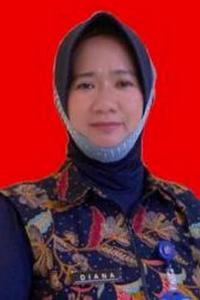
Head of Study Program
2026-04-22
Understanding How Imbalances in Hip and Ankle Mobility Can Impact Your Knee Health and How Professional Guidance Can Restore Pain-Free Movement
2026-04-22
Understanding the Role of Targeted Physical Therapy in Stimulating Nerve Recovery and Restoring Natural Facial Expressions.
2026-04-22
UNPRI's Commitment to Shaping Competent, Adaptive Physiotherapists Ready to Excel in Clinical, Industrial, and Digital Health Sectors.