Vision
Producing Master of Tropical Medicine graduates who are professional, have a socio-technopreneurship insight and excel in the field of Parasitic Infectious Diseases




Master · Universitas Prima Indonesia
<p>Program Studi Magister Kedokteran Tropis UNPRI menghasilkan sumber daya manusia yang memiliki kompetensi yang unggul di bidang ilmu Kedokteran Tropis, dan mengaplikasikan pengetahuan dalam penelitian yang dapat bersaing di pasar global dan bertaraf internasional. Bagi dunia Ilmu kedokteran, diharapkan adanya temuan ilmiah baru dalam Kedokteran Tropis yang dikembangkan berupa produk pelayanan kesehatan inovatif dan mendukung daya saing nasional, melalui kegiatan penelitian dan pengabdian masyarakat yang berkualitas dapat dimanfaatkan untuk meningkatkan kesehatan masyarakat, bangsa dan negara.</p>
Master's program focusing on tropical diseases and their control.
The Master's Program in Tropical Medicine is an advanced education program focusing on the study and control of tropical diseases. This program aims to train medical professionals and researchers capable of understanding, analyzing, and developing solutions for managing infectious diseases commonly found in tropical regions. Students will gain in-depth knowledge of epidemiology, pathogenesis, diagnostics, and treatment of tropical diseases such as malaria, dengue fever, tuberculosis, and parasitic infections. The research-based curriculum and fieldwork opportunities allow students to develop skills in biomedical research and public health policy implementation. In addition to academic and clinical skills, this program emphasizes research methodology, health data analysis, and strategies for disease outbreak prevention and control. Students are encouraged to publish scientific papers and participate in academic conferences to broaden their knowledge. Graduates of this program are expected to contribute to medical research, health policy development, international health organizations, and institutions involved in infectious disease control at national and global levels.
Producing Master of Tropical Medicine graduates who are professional, have a socio-technopreneurship insight and excel in the field of Parasitic Infectious Diseases
Produce health worker graduates with Masters in Tropical Medicine qualifications who are professional, adhere to the code of medical ethics, excel in Parasitic Infectious Diseases and have an insight into Sociotechnopreneurship;The production of science and technology which is used to answer medical problems, especially in the field of Parasitic Infectious Diseases, which is useful for improving the level of public health;Sociotechnopreneurship-based community service, reasoning and research works on Parasitic Infectious Diseases are produced which are useful for solving health problems;Producing excellent service with optimal internal resource management and supported by collaboration with institutions both domestic and foreign.
Creation of health worker graduates with Masters in Tropical Medicine qualifications who are professional, adhere to the code of medical ethics, have an advantage in Parasitic Infectious Diseases and have a sociotechnopreneurship insight;Creation of Scientific Work in the field of Parasitic Infectious Diseases which is used to answer medical problems, especially to improve public health;The realization of community service based on sociotechnopreneurship, reasoning and research works on parasitic infectious diseases that are useful for solving tropical health problems;The realization of excellent service with good governance to ensure the achievement of graduate competencies;Creation of quality, mutually beneficial institutional collaboration activities to support the achievement of graduate competencies;Creation of superior human resources to support the achievement of graduate competencies;Creation of students who excel and achieve both academically and non-academicly.
| Code | Course / Stage | Credits |
|---|---|---|
| KDT803013 | Surveilans Manajemen Penyakit Tropis | 3 |
| KDT804016 | Publikasi | 4 |
| KDT804015 | Tesis | 4 |
| Total | 11 | |
| Code | Course / Stage | Credits |
|---|---|---|
| KDT803017 | Diseminasi | 3 |
| Total | 3 | |
Fields of work and professional roles graduates may pursue after completing the program.
Lulusan berperan sebagai dosen/akademisi pada program pendidikan kedokteran tropis maupun profesi kesehatan terkait, yang merencanakan, melaksanakan, dan mengevaluasi proses pembelajaran, mengembangkan bahan ajar berbasis bukti terkini, serta membimbing peserta didik.
Lulusan berperan sebagai peneliti pada lembaga riset, institusi pendidikan, maupun organisasi kesehatan yang merancang, melaksanakan, dan mendiseminasikan penelitian di bidang kedokteran tropis dan penyakit infeksi berbasis evidence-based, meliputi kajian biomedik, epidemiologi, dan klinis, untuk pengembangan ilmu pengetahuan dan publikasi ilmiah.
Characteristics and capabilities expected of graduates of this study program.
Menggambarkan lulusan yang mampu menjalankan tugas dan profesinya berdasarkan nilai etika dan moral, menunjukkan sikap profesional dan integritas, serta bertanggung jawab terhadap setiap tindakan dan keputusan. Lulusan juga mampu beradaptasi terhadap perubahan dan menciptakan nilai bagi masyarakat.
Lulusan yang unggul dan profesional di bidang kedokteran tropis, menguasai teori dasar dan aplikatif kedokteran tropis secara inovatif dan adaptif terhadap perkembangan ilmu dan praktik kedokteran mutakhir.
Menggambarkan lulusan berkompeten sebagai dosen/akademisi kedokteran tropis: mampu merancang pembelajaran, mengembangkan bahan ajar, serta membimbing dan mengevaluasi peserta didik.
Menggambarkan lulusan berkompeten sebagai peneliti kedokteran tropis: mampu merancang penelitian, menganalisis data, dan mengomunikasikan hasil penelitian secara ilmiah.
Attitudes, knowledge, and skills students are expected to achieve by graduation.
Demonstrate devotion to God Almighty and uphold religious, nationalistic, tolerant, ethical, responsible, and moral values while respecting human dignity.
Menggambarkan sikap religius, etika, moral, nasionalisme, toleransi, dan tanggung jawab dalam kehidupan akademik dan profesional.
Comprehensively master the theories and fundamental concepts of epidemiology and pathobiology, as well as the management of tropical and infectious diseases.
Menguasai teori dan konsep dasar epidemiologi, patobiologi, serta tata laksana penyakit tropis dan infeksi secara komprehensif, sebagai fondasi keilmuan untuk diagnosis dan pengelolaan klinis yang tepat. (Kognitif — Menerapkan, C3)
Design and implement innovative, evidence-based tropical medicine teaching-learning processes for higher health education learners.
Kemampuan evaluatif merancang strategi pembelajaran dengan presisi pelaksanaan, terorganisasi sesuai kaidah pedagogik
Develop up-to-date tropical medicine teaching materials, modules, and instructional media aligned with learners' competency needs.
Kemampuan mencipta bahan ajar dengan presisi penyusunan
Mentor and evaluate learners' academic achievement in tropical medicine objectively and continuously.
Kemampuan evaluasi capaian belajar dengan sikap terorganisasi dan tanggung jawab dalam pembimbingan .
Analyze fundamental concepts of tropical medicine—integrating biomedical, epidemiological, and clinical sciences—to apply these principles in the study of tropical and infectious diseases.
Landasan kemampuan memahami mekanisme penyakit tropis dalam konteks biomedik-epidemiologi-klinis terintegrasi
Analyze the epidemiology, etiology, pathogenesis, clinical manifestations, diagnosis, and management of tropical and infectious diseases to determine appropriate control strategies.
Kemampuan evaluasi terhadap data klinis-epidemiologis penyakit tropis untuk menentukan strategi pengendalian, berorientasi keselamatan dan kepentingan masyarakat.
Design and conduct research in tropical medicine and infectious diseases using appropriate, systematic scientific methodology in accordance with research ethics.
Kemampuan evaluatif merancang desain penelitian dan presisi pelaksanaan penelitian lab/lapangan, terorganisasi sesuai etik penelitian.
Critically analyze biostatistical and epidemiological data to support clinical decision-making, health policy, and the interpretation of tropical medicine research findings.
Kemampuan evaluasi data statistik-epidemiologi dengan presisi pengolahan data untuk mendukung keputusan berbasis bukti.
Critically analyze and synthesize tropical medicine scientific literature from various sources to support scientific argumentation and research development.
Kemampuan evaluasi kritis terhadap kualitas dan relevansi literatur ilmiah sebagai dasar argumentasi penelitian.
Effectively communicate tropical medicine research findings and scientific information, both orally and in writing, including manuscript preparation for scientific publication.
Kemampuan menerapkan kaidah komunikasi ilmiah dan berkolaborasi dalam penyusunan publikasi.
Collaborate interprofessionally and uphold research ethics and social responsibility in every tropical medicine research activity.
Kemampuan menganalisis kebutuhan kolaborasi interprofesional dengan penghayatan nilai etik penelitian dan tanggung jawab sosial.
Approved and locked RPSMK are grouped by semester. The cohort source follows the newest available RPSMK for each course in that semester.
This course covers the concepts and application of surveillance and management of tropical diseases, including types and systems of public health surveillance, epidemiology of priority tropical diseases, neglected tropical diseases and zoonoses, national surveillance systems and the International Health Regulations, vector surveillance and the One Health approach, collection, validation, and analysis of surveillance data including spatial analysis, early detection and early warning systems, outbreak investigation and response, laboratory and genomic surveillance, surveillance system evaluation, as well as planning programmes for the control, elimination, and eradication of tropical diseases, integrated vector management, mass drug administration and vaccination, case management and referral, community empowerment and risk communication, programme monitoring and evaluation, and digital surveillance innovation and policy recommendations. Learning is conducted through a pre-test at the start of each course learning outcome (CPMK), expert lectures each followed by a post-test for every topic, and a Project evaluation at the end of each CPMK, providing a foundation for students to design and manage surveillance systems and tropical disease control programmes.
The Scientific Publication course is an output-based course aimed at producing a scientific article from thesis research in the field of tropical medicine, published in a nationally accredited (SINTA) or internationally reputable (Scopus/WoS/PubMed) medical journal. Students undertake the complete publication process, from selecting the research results and target journal, drafting an IMRaD manuscript according to ICMJE recommendations and EQUATOR reporting guidelines, checking publication ethics and similarity, submission, and revision based on reviewer feedback, through article publication and dissemination at scientific forums. This process is guided by supervisors and monitored through manuscript presentation forums.
The Thesis course is a research-based course aimed at producing a scholarly work in the form of a thesis in the field of tropical medicine. Students undertake the complete research process, from determining a tropical disease research topic, proposal development, proposal seminar, ethical clearance and permits, field, clinical, or laboratory data collection, data processing and analysis, and thesis writing, through the results seminar and thesis defense, and disseminate the research findings as scientific publications. This process is guided by thesis supervisors and monitored through research progress seminars.
The Research Dissemination course is an output-based course aimed at communicating thesis research results in the field of tropical medicine to the scientific community, health stakeholders, and the public. Students undertake the complete dissemination process, from identifying key findings and dissemination targets, stakeholder mapping, and developing key messages, to writing conference abstracts, producing presentation slides, scientific posters, infographics, and policy briefs, presenting at program scientific forums and national/international seminars or conferences, delivering recommendations to stakeholders, ethical public communication, and archiving works and compiling a dissemination output report. This process is guided by supervisors and monitored through program scientific forums.

Head of Study Program

Instructor
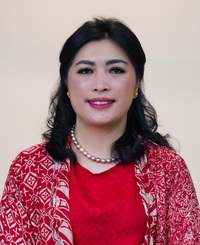
Professor

Professor

Associate Professor

Associate Professor

Associate Professor

Lecturer

Lecturer

Professor

Associate Professor

Lecturer
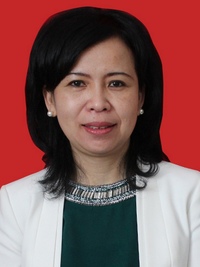
Assistant Professor

Assistant Professor

Professor

Assistant Professor

Associate Professor

Assistant Professor