Vision
To become a study program that produces superior dental graduates in the field of innovative and adaptive socio-technopreneurship by 2030


Bachelor · Universitas Prima Indonesia
The Beginning of the Journey for Future Dentists
Professional education for aspiring dentists.
A Bachelor of Dental Education, or Sarjana Pendidikan Dokter Gigi, is a specialized undergraduate program designed for individuals aspiring to become dental educators and practitioners. This degree combines rigorous coursework in dental sciences with pedagogical training, equipping graduates with the skills necessary to teach dental students and promote oral health in various community settings. The curriculum typically includes subjects such as anatomy, physiology, dental materials, and clinical practice, alongside education theory and instructional methods.Students in this program not only learn the technical aspects of dentistry but also develop essential communication and leadership skills. This dual focus prepares them to effectively convey complex information to future dental professionals and engage with diverse populations regarding oral health education. Graduates can expect to find opportunities in academic institutions, public health organizations, and dental clinics, where they can contribute to both teaching and clinical practice.The role of a dental educator is increasingly important in today's healthcare landscape, as the demand for qualified dental professionals continues to rise. By integrating education and practice, a Bachelor of Dental Education fosters a holistic approach to dental care, emphasizing the importance of preventive measures and community outreach. As dental health becomes a critical component of overall well-being, graduates are positioned to make significant contributions to the field, shaping the next generation of dental practitioners and improving public health outcomes.
To become a study program that produces superior dental graduates in the field of innovative and adaptive socio-technopreneurship by 2030
Producing competent and ethical dental graduates for the benefit of individuals, families and society.Producing dental graduates who are able to solve dental and oral health problems based on priorities for preventive and promotive actions for individuals, families and communities independently or in collaboration.Producing dental graduates who have high skills in maintaining dental and oral health and applying technology in servicesProducing dental graduates who are able to develop a socio-technopreneurship spirit in providing health services, especially dental and oral health.Producing dental graduates who are sensitive to environmental changes to improve the public's dental and oral healthProducing dental graduates who have the spirit of life long learning to face developments in knowledge and technology.Producing dental graduates who develop innovative research in solving dental and oral health problems.
Enhancing the quality of a competency-based curriculum in accordance with national and international dental education standards. Increasing the quantity and quality of research and scientific publications in the field of dentistry. Expanding collaborations with hospitals, clinics, academic institutions, and the healthcare industry to support education and research. Improving students’ clinical skills through evidence-based practice and the latest dental technology. Increasing student involvement in community service activities to raise awareness and improve public oral health. Enhancing faculty competencies through training, certification, and research in the field of dentistry. Developing technology-based learning systems to support the effectiveness and efficiency of the education process.
| Code | Course / Stage | Credits |
|---|---|---|
| PDG2603001 | Dasar Ilmu Kesehatan | 3 |
| PDG2603002 | Sistem Tubuh Manusia I | 3 |
| PDG2603003 | Sistem Tubuh Manusia II | 3 |
| PDG2603004 | Sistem Tubuh Manusia III | 3 |
| PDG2602005 | Kesehatan, Masyarakat, dan Perilaku Manusia | 2 |
| MKU602012 | Bahasa Indonesia | 2 |
| MKU602056 | Pancasila | 2 |
| MKU602083 | Agama | 2 |
| Total | 20 | |
Open a course to explore its overview and the Course Learning Outcomes (CPMK) students are expected to achieve.
Fundamental of Health Science is a foundational course integrating principles of chemistry, biochemistry, cell and molecular biology, and genetics as a basis for understanding normal body structure and function, homeostasis, fundamental mechanisms of disease, and their relevance to dentistry.
Human Body Systems I is a foundational course that examines the macroscopic and microscopic structures, functions, and basic biochemical aspects of body tissues, the integumentary system, the musculoskeletal system, and the nervous system. The course integrates anatomy, histology, physiology, and biochemistry through theoretical and practical learning to develop an understanding of structure–function relationships in the human body as a foundation for dental education.
Human Body Systems II is a foundational course that examines the macroscopic and microscopic structures, functions, and basic biochemical aspects of blood and the lymphatic, cardiovascular, respiratory, and urinary systems. The course integrates anatomy, histology, physiology, and biochemistry through theoretical learning, practical sessions, and skills laboratory activities to develop an understanding of substance transport, circulation, gas exchange, fluid and electrolyte balance, acid–base regulation, and excretion as essential processes in maintaining human body homeostasis.
Human Body Systems III is a foundational course that examines the macroscopic and microscopic structures, functions, and basic biochemical aspects of the digestive, endocrine, and reproductive systems, as well as the special senses. The course integrates anatomy, histology, physiology, and biochemistry through theoretical learning, practical sessions, and skills laboratory activities to develop an understanding of nutrient digestion and absorption, metabolism and energy balance, neuroendocrine and hormonal regulation, reproductive function, and the mechanisms of vision, hearing and balance, olfaction, and taste. The course provides a foundation for understanding the relationships of systemic conditions, nutritional status, hormonal changes, pregnancy, and sensory function with health and dental care.
Health, Society, and Human Behavior is a longitudinal course that examines the relationships among health, society, culture, environment, and human behavior as a foundation for understanding health and oral health at individual, group, and community levels. The course integrates public health, sociology, anthropology, psychology, and health communication through the study of concepts of health and illness, health determinants, sociodemographic characteristics, family and culture, health inequalities and access to care, health behavior and behavior change, health literacy and digital information, empathetic communication, motivation and adherence, psychological responses to healthcare, and the principles of health promotion, disease prevention, and tele-education.
Indonesian Language is a compulsory General Course (MKU) that all students must take. It is offered to strengthen students' character and is available in both odd and even semesters. The scope of the course covers the historical development of the Indonesian language, its status and functions, general spelling guidelines, word formation processes, word choice, sentences and effective sentences, paragraphs and their development patterns, scientific papers, popular scientific writing, and official letter writing.
This course aims to equip students with a comprehensive understanding of Pancasila as the foundation of the state, the state ideology, the nation’s way of life, and a source of values that guide social, national, and civic life.
General education in religion refers to foundational courses designed to develop students' understanding of spiritual values, ethics, morals, and theological teachings from their respective faiths, while fostering religious tolerance and moderation within a pluralistic society.

Head of Study Program


12 JUN 2026
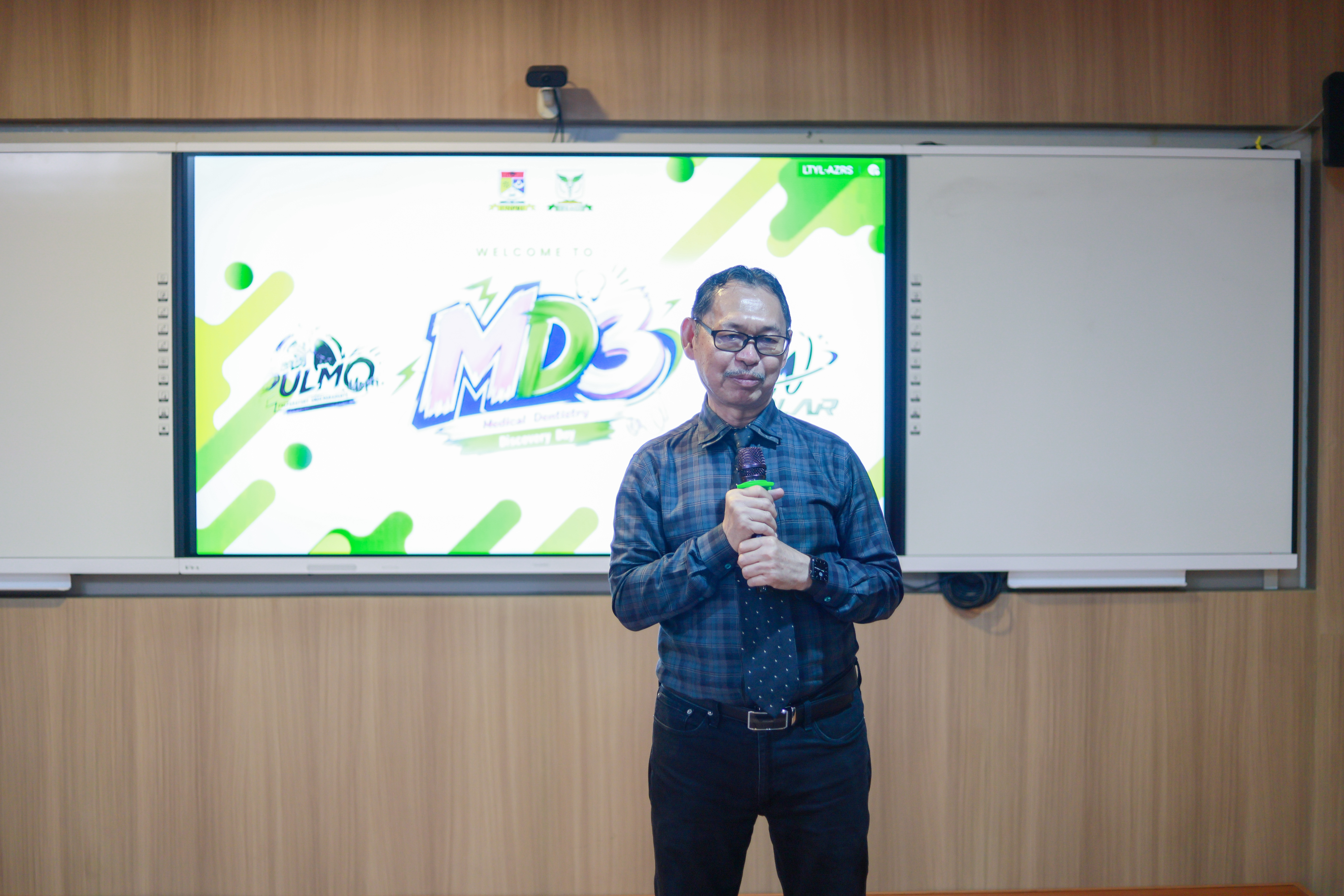
Medan, 11 Juni 2026 — Fakultas Kedokteran dan Kedokteran Gigi (FKKG) Universitas Prima Indonesia (UNPRI) kembali sukses menyelenggarakan Medical Dental Discovery Day (MD3) Batch 2 di Hybrid Classroom Lantai 12 Kampus ...